The Quiet Objection Gap: Questions Your Product Page Never Answers
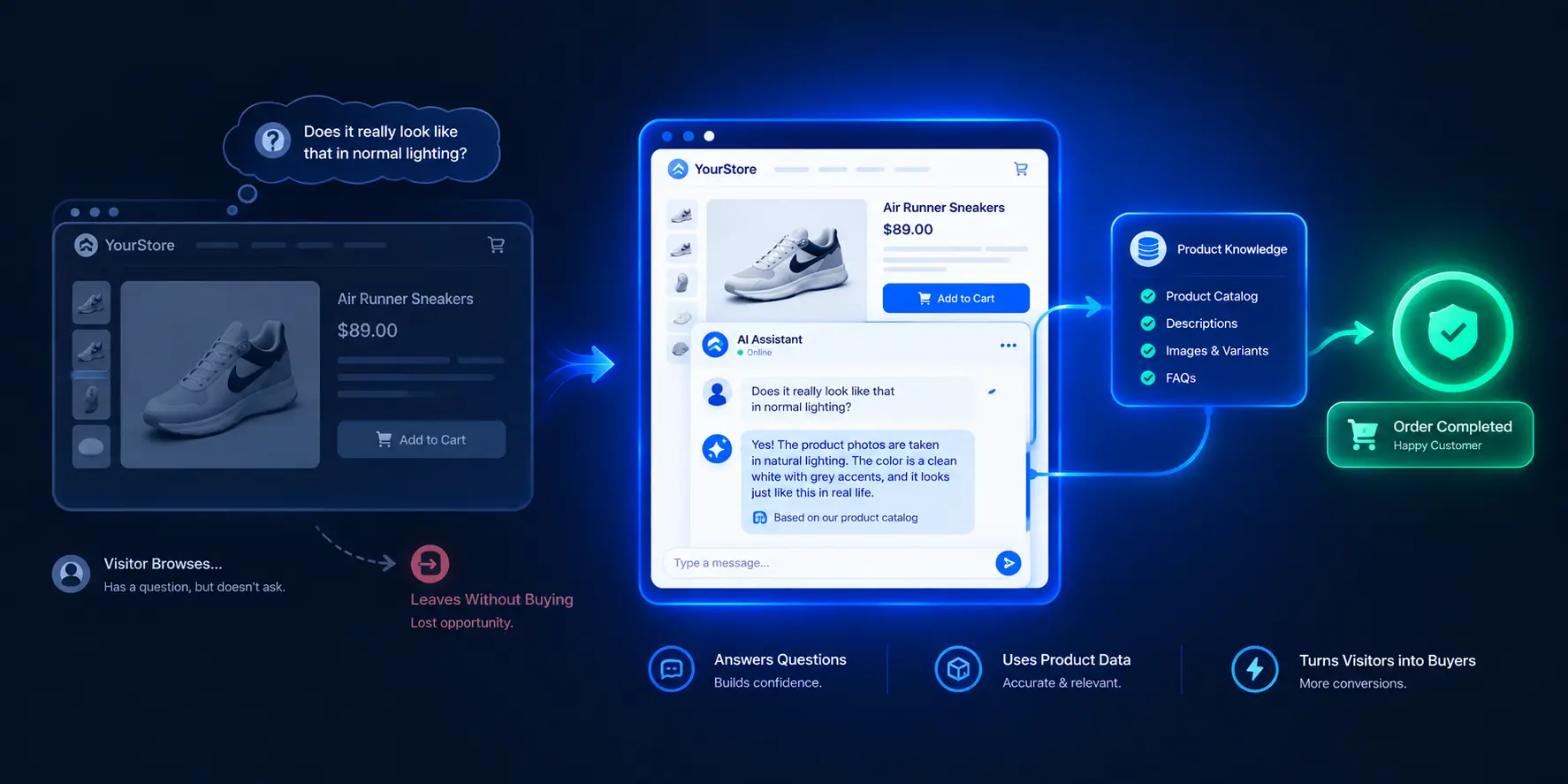
Reviews answer buyer questions — but only for shoppers who scroll. Learn how catalog-aware chat turns quiet objections into answered questions on every PDP.
The Quiet Objection Gap: Answering the Buyer Questions Your Product Page Can't
Every product page answers the loud questions. Price, features, materials, shipping — they're printed right there in the spec sheet and description block.
But the questions that actually decide the sale are quieter:
"Does it really look like that in normal lighting — or only in studio shots?" "Is the size accurate? Will it fit someone like me?" "Does it hold up after a few weeks of real use?" "Would someone like me actually be happy with it?"
No one emails your support team about these. Few shoppers type them into a search box. They're the lived-experience questions — the ones reviews and real customer photos answer, but only for shoppers willing to scroll down and hunt for them.
For everyone else — the buyers who decide from the top half of your product page — these questions go unanswered. And unanswered questions don't pause the purchase decision. They end it. The buyer closes the tab, and your analytics records one more silent bounce with no explanation attached.
Operators in ecommerce communities describe this gap plainly: brands pile up user-generated content — customer photos, review videos, testimonials — "but have zero system for where they'll actually use them." The content exists. The objection-answering doesn't.
Here's how to close the gap: turn the quiet objections your buyers never voice into a knowledge base, and put an answer surface on every product page that speaks it.
The Questions That Decide the Sale (But Never Get Asked)
What Spec Sheets Can't Answer (Real Lighting, True Size, Durability, "Fit for Someone Like Me")
A spec sheet is excellent at what it does: dimensions, materials, care instructions, shipping weight. But it cannot answer "will I be happy with this?" — because that question requires lived experience, not specifications.
Studio photography actively widens the gap. Perfect lighting, styled backgrounds, professional color grading — all of it creates an expectations gap between what the product page shows and what arrives in the box. That's not deception; it's marketing. But the buyer knows it, which is exactly why "does it really look like that?" is such a common quiet objection.
The Silent Leaver: Why Unconvinced Buyers Bounce Without a Trace
Here's what makes the quiet objection gap so expensive: it's invisible. A buyer with an unanswered question doesn't complain, doesn't open a support ticket, doesn't abandon a cart (there's nothing in the cart yet). They just leave.
In your analytics, they look identical to a low-intent visitor. In reality, they may have been a high-intent buyer who needed one honest answer — "the color is slightly warmer than the photos suggest, and our fit notes say it runs true to size" — and never got it.
Why This Hits Visually-Driven Catalogs Hardest (Fashion, Beauty, Home)
The more visual the purchase, the wider the expectations gap. Fashion has fit, drape, and color-under-real-lighting. Beauty has skin-tone compatibility and texture. Home goods have scale and how-it-looks-in-actual-living-room questions. These are the categories where UGC and reviews carry the most decision weight — and where the buyers who never see them lose the most.
Why Reviews and UGC Only Half-Solve It
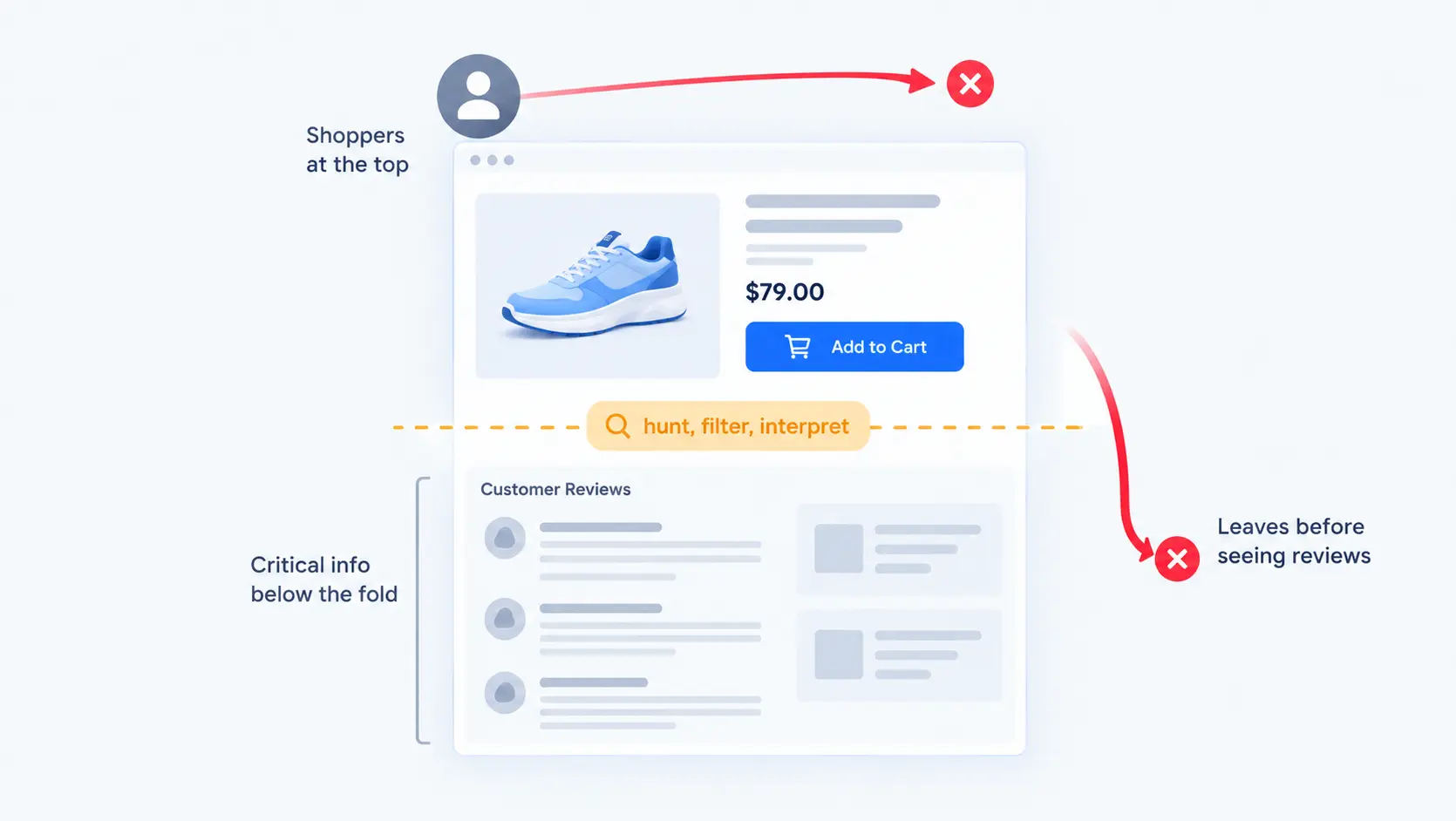
The Scroll Divide: Answers That Live Below the Fold and Behind Tabs
Reviews and UGC galleries do answer quiet objections — real customer photos show the product in real lighting, review narratives describe fit and durability over time. That's why operators consistently report authentic customer content builds more buyer confidence than polished brand content.
The limitation is placement. Reviews live below the fold, behind tabs, or in carousels the buyer has to notice and navigate. The answers exist — but they only reach the shoppers willing to scroll, hunt, and interpret. Buyers who decide from the top of the page never see them.
Decoration vs. System: Brands Hoarding Content With No Objection-Answering Plan
Operators describe a consistent pattern: brands collect large volumes of UGC — customer photos, video reviews, testimonials — with no system for permissions, placement, or measurement. The content becomes page decoration. It signals "people like this brand" without answering the specific question this specific buyer is silently asking about this specific product.
UGC works as a system when each piece answers a named objection: this photo answers "what does it look like on a real person," this review answers "does the color fade," this video answers "how does it move when worn." Decoration shows content. A system routes answers.
The Shopper's Burden: Making Buyers Hunt, Interpret, and Self-Serve
Even when the review section is thorough, the quiet objection puts the research burden on the buyer: scroll down, find the review carousel, filter or search, read six reviews, mentally average the fit feedback, and decide. That's work. Some shoppers do it — and buy. Many don't — and leave. The ones who leave were not low-intent; they were high-effort-averse, which is most humans.
The Existing Approaches and Where They Cap Out
Static Q&A sections — pre-written questions per product — go stale quickly, answer generic versions of the real questions, and can't follow up when the buyer's situation is slightly different from the template.
Staffed live chat answers subjective questions well — during business hours, at human speed, with human cost. It doesn't scale to every product page, every visitor, every hour, and the slow first response during peak times reintroduces the very delay that kills impulse decisions.
Doing nothing — the default — means the conversion loss stays silent. No report shows "revenue lost to unanswered lighting questions." The gap survives every CRO review because it hides inside "bounce rate."
The Catalog-Aware Objection-Answering Framework (4 Steps)
The fix is to treat your quiet objections as an answerable knowledge problem — then put that knowledge where buyers actually are.
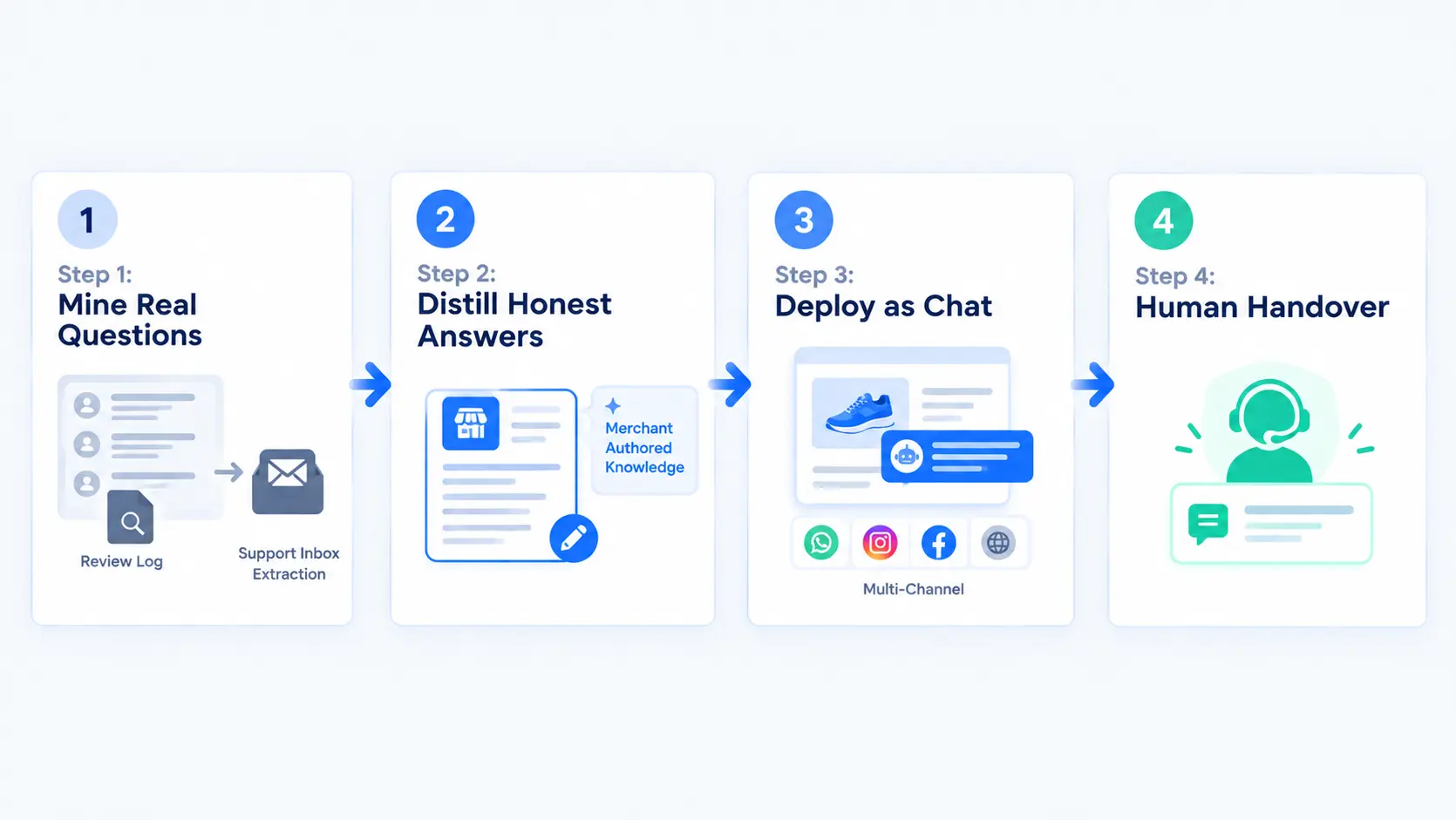
Step 1: Mine the real questions from your reviews and support logs
Step 2: Distill honest answer knowledge (fit notes, sizing, care, review-derived summaries)
Step 3: Deploy it as chat on the PDP and every channel buyers use
Step 4: Route subjective edge cases to humans
Step 1: Mine the Real Questions From Your Reviews and Support Logs
You already own the raw material. Your reviews tell you what buyers wondered before purchasing; your support logs and DMs tell you what they asked after. Read them and extract the recurring question patterns: lighting and color accuracy, fit and sizing, durability over time, compatibility ("would this work for sensitive skin?").
Most brands find the same dozen questions drive the majority of hesitation. Those dozen are your knowledge base's table of contents.
Step 2: Distill Honest Answer Knowledge (Fit Notes, Sizing Guidance, Care Instructions, Review-Derived Summaries)
Now write honest answers — as the merchant, in your brand's voice. Sizing notes ("runs true to size; between sizes? Size up for a relaxed fit"), lighting and color guidance ("the studio photos are color-graded; in natural light the tone is slightly warmer"), durability facts, care instructions, and honest summaries of what your reviews consistently say ("customers with oily skin most often pair this with...").
The key word is honest. You are distilling real patterns from real customer feedback and your own product knowledge — not writing marketing copy. The buyer asking "does it really look like that?" deserves a truthful answer, because trust is the entire point.
Step 3: Deploy It as Chat on the PDP and Every Channel Buyers Use
This knowledge belongs on the product page as a conversational surface — a chat widget that can answer "will this fit me?" with your actual fit notes, in the moment, without the buyer scrolling or searching. And because buyers ask the same questions on WhatsApp, Instagram DMs, and Facebook Messenger, the same catalog-aware answers should extend across every channel — with the full conversation history visible in one inbox.
Example (fictional illustrative scenario, modeling honest behavior):
Buyer: "Does this lamp look that warm in real life, or is it the photos?"
Assistant: "The listing photos are shot in a studio setup. Per our product notes, in normal home lighting the shade reads slightly cooler than the listing suggests, and customers often pair it with a warm-tone bulb for the cozy effect. Our care guide also notes the finish is matte, not glossy."
The answer draws on knowledge the merchant supplied — not invented customer claims. That distinction matters enormously, and we'll come back to it.
Step 4: Route Subjective Edge Cases to Humans
Some questions deserve a human: "will this work for my specific skin condition?", custom-fit situations, one-off edge cases. The framework's last step is a handover rule — the assistant recognizes the limits of its knowledge and routes the conversation to your team with full context preserved, so the buyer never repeats themselves.
The Honesty Limit: What AI Answers Should Never Do
The biggest risk with AI answering subjective questions isn't technical — it's honesty. Done wrong, a chat assistant "answering" lived-experience questions can slide into fabricating the social proof your buyers are really looking for. Three hard limits prevent that:
Relaying Merchant-Supplied Knowledge — Not Role-Playing Customers
The assistant speaks as the brand, relaying knowledge the business actually supplied: fit notes, care instructions, sizing guidance, review-derived summaries the merchant wrote. It never role-plays as a customer, never invents "I bought this and..." claims, and never generates synthetic testimonials to sound like UGC. The moment an assistant starts pretending to be a satisfied customer, it's manufacturing the exact trust it exists to earn.
No Auto-Pulled Review Feeds, No Customer Media in Chat
The assistant doesn't auto-ingest your live review platform or display actual customer photos and videos inside the chat. It works from the knowledge documents you deliberately supply. That's a feature, not a limitation: you control what it says, and it stays consistent with your actual policies and product truth.
Why Honesty Is the Trust Feature (And a Conversion One)
Here's the strategic point most brands miss: the honesty limit is the product. Buyers asking quiet objections are really asking "can I trust this brand to tell me the truth?" An assistant that answers honestly — including admitting "our photos are color-graded; here's what to expect in natural light" — answers the deeper question better than any polished marketing copy can. Honest answers convert because they resolve the actual uncertainty.
What to Look for in a PDP Chat Assistant
| Capability | Why It Matters | Buyer Impact | |---|---|---| | Trained on YOUR knowledge | Ingests your fit notes, sizing guidance, FAQs, policies, and review-derived summaries — not generic web content | Answers match your actual products and terms | | Catalog context | Knows variants, sizes, colors, and stock status | Product-specific answers, not generic chat | | Multi-channel consistency | Same answers on website chat, WhatsApp, Instagram, Facebook | The question gets the same honest answer wherever it's asked | | Unified inbox + human handover | Subjective edge cases route to your team with full context | Hard questions get human judgment, fast |
Conclusion: From Decoration to System
The quiet objection gap closes when brands stop treating buyer questions as noise and start treating them as the highest-intent signal on the product page. Every unanswered question is a purchase waiting for one honest answer.
The framework: mine the real questions from your reviews and support logs, distill honest answers into a knowledge base, deploy it as catalog-aware chat on every product page and channel, and hand the truly subjective cases to humans. Your reviews keep doing their job for the scroll-readers. Your chat starts doing it for everyone else.
Answer the Questions Your Buyers Never Ask
Discover UpsellDesk — a catalog-aware AI assistant trained on your own product knowledge, fit notes, and policies, answering buyer questions honestly on website chat, WhatsApp, Instagram, and Facebook — with human handover built in.
Ready to get started?
Start using UpsellDesk today and transform your customer conversations.
Written by
UpsellDesk Team · Content Strategist at UpsellDesk
Related Articles
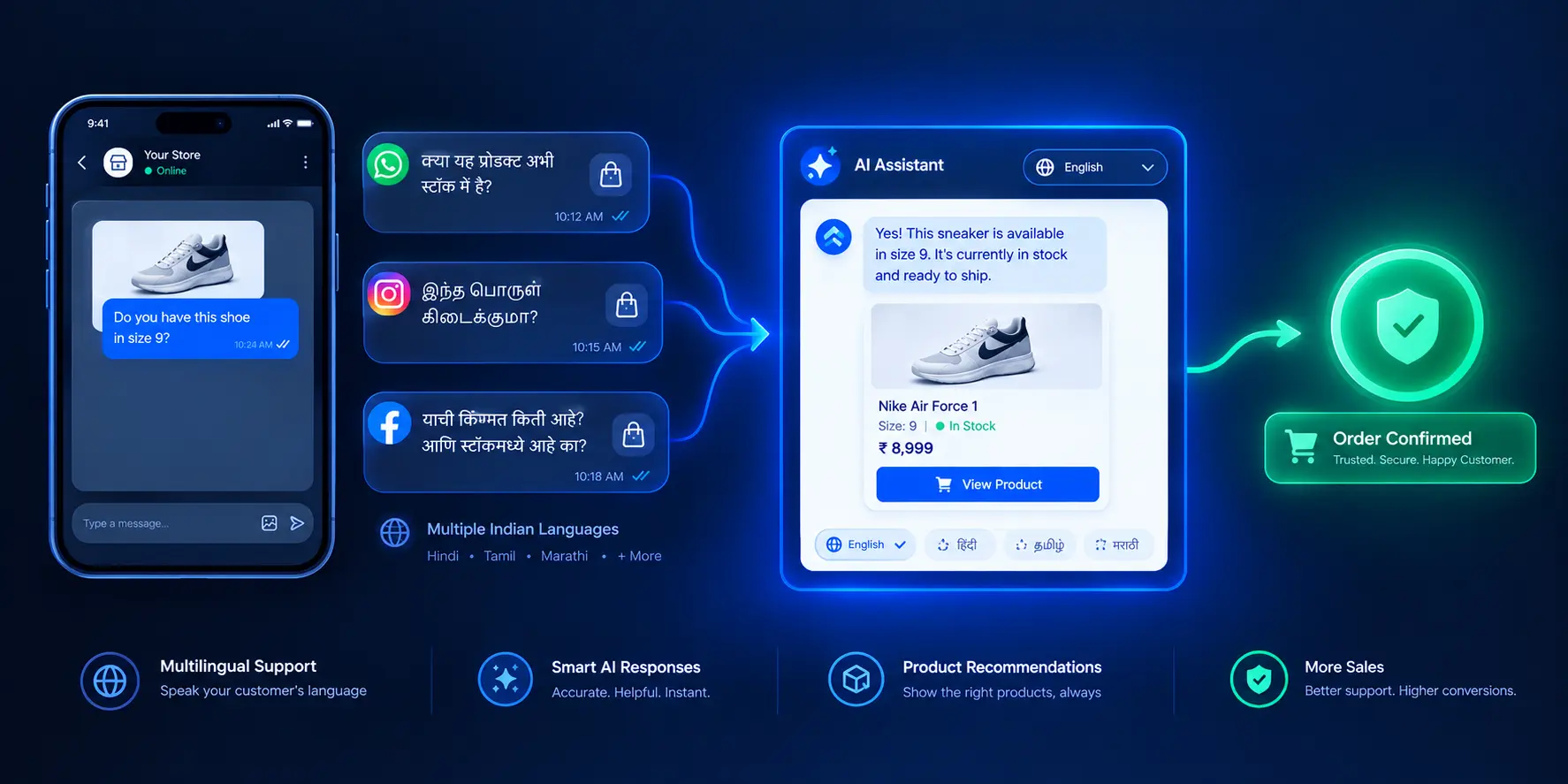
Selling in Tier-2 India: Handle Regional Language Inquiries with AI
Learn how Indian D2C brands answer Tier-2/3 shoppers in 22 regional languages using catalog-aware AI support across WhatsApp, Instagram, and website chat.
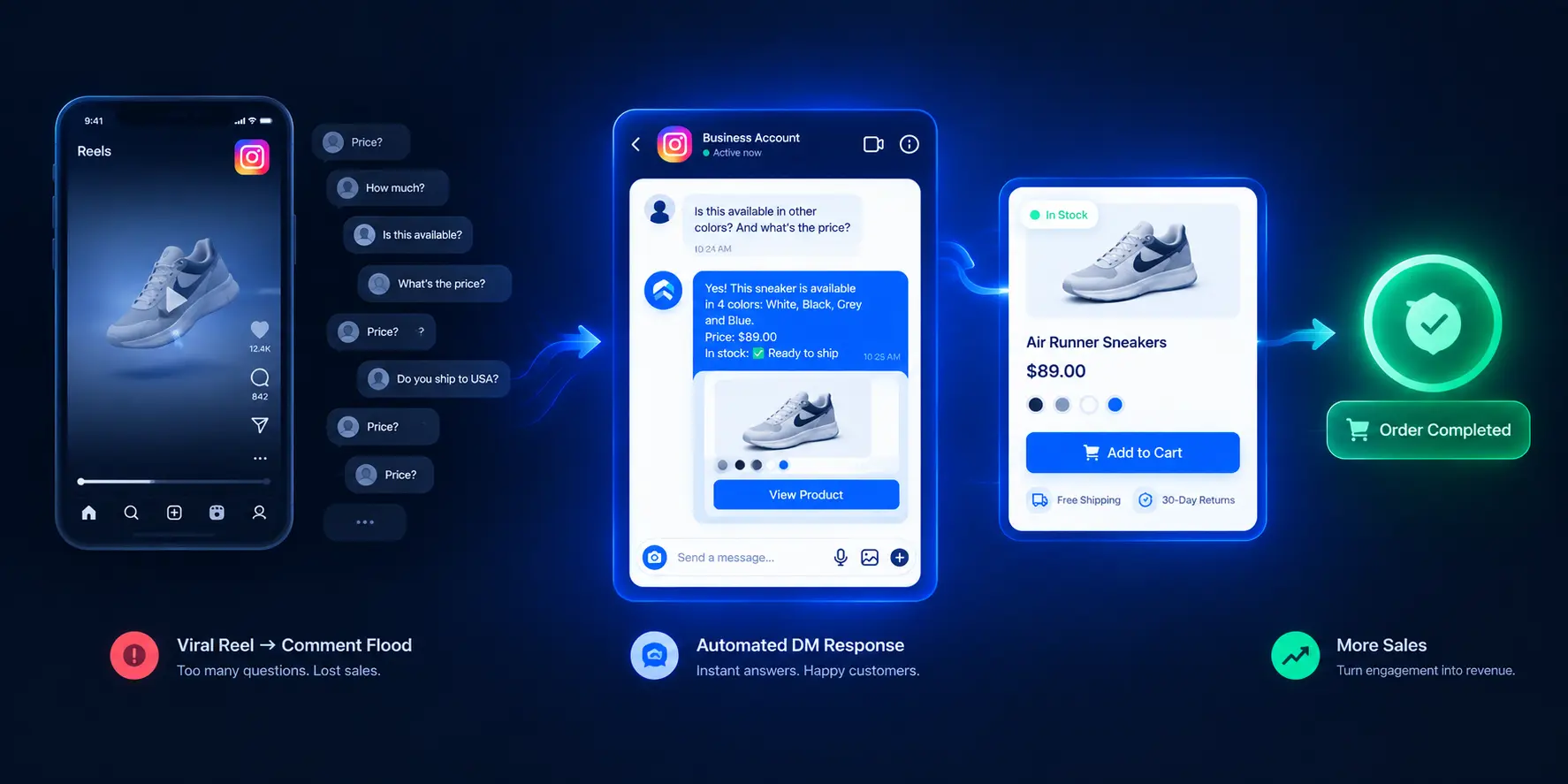
Ending "Price Kya Hai?" Chaos: Instagram Sellers Automate DM Sales
Learn how Indian Instagram sellers automate "Price?" comments into instant DM conversations with catalog details, turning social engagement into sales.
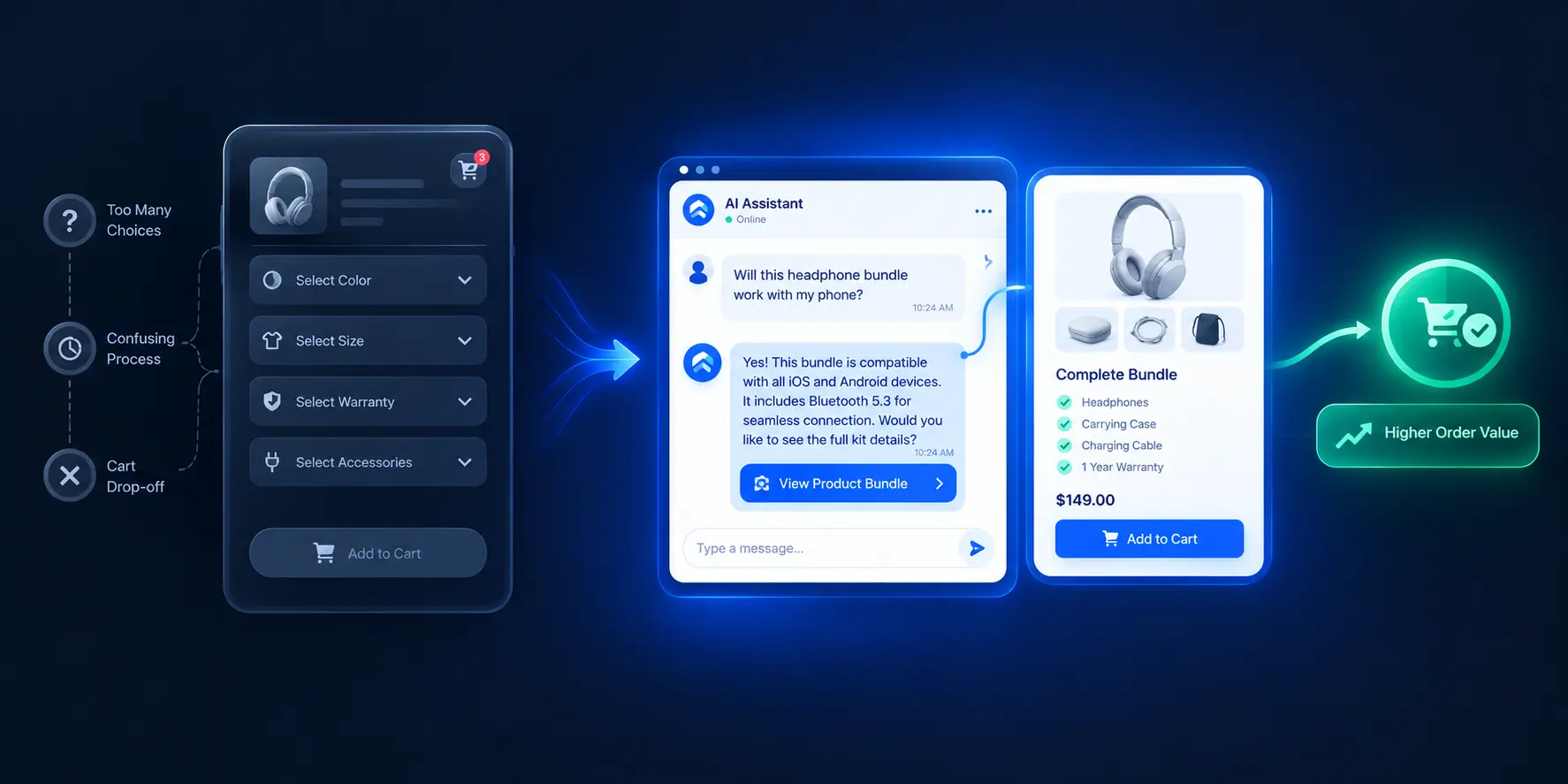
Beyond Dropdown Widgets: How D2C Brands Sell Complex Bundles in Chat
How D2C ecommerce brands use catalog-aware chat to guide shoppers through custom bundle and kit selection, eliminating choice paralysis and cart drop-off.