Selling in Tier-2 India: Handle Regional Language Inquiries with AI
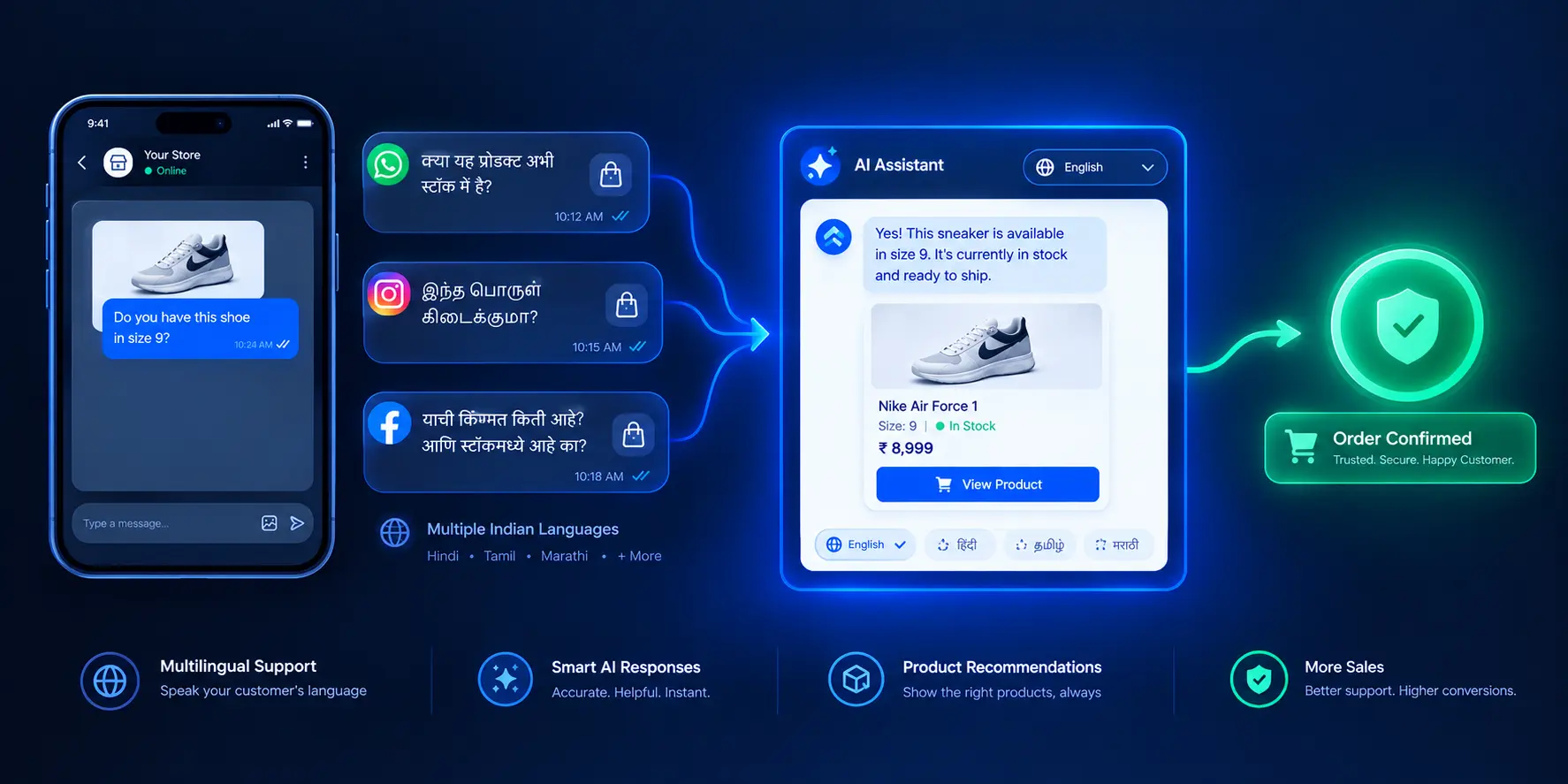
Learn how Indian D2C brands answer Tier-2/3 shoppers in 22 regional languages using catalog-aware AI support across WhatsApp, Instagram, and website chat.
Selling in Tier-2 India: How D2C Brands Handle Every Regional Language Inquiry with Multilingual AI Support
The next phase of Indian ecommerce growth isn't in Mumbai or Bengaluru. It's in Nagpur, Indore, Coimbatore, Lucknow, and hundreds of Tier-2 and Tier-3 cities where ad costs are still cheap, competition is thinner, and buyers are discovering D2C brands for the first time.
Indian D2C brands have noticed. Meta and Google campaigns now routinely target non-metro geographies, and the clicks come in — affordably and at volume.
Then the messages start arriving. A shopper from Indore asks about delivery in Hindi. A customer in Coimbatore asks whether the saree comes in another color, in Tamil. A buyer in Nagpur types a mix of Marathi and English, asking whether the product is "original aur warranty wala."
And for most growing brands, this is where the expansion quietly breaks.
The ads spoke to these shoppers. The product pages converted them. But the moment they ask a question in their own language — the language they think and trust in — the conversation dies. English-only support teams can't reply accurately. Copy-pasting into translation tools produces stiff, context-blind answers that break trust at the exact moment a buyer decides whether to pay.
Here's the operational playbook for fixing that: serving every regional-language inquiry your non-metro campaigns generate, without hiring a support agent for each language.
The Tier-2/3 Language Gap: When Your Ads Speak to Shoppers Your Support Team Can't
The New Geography of Indian Ecommerce Growth
Tier-2/3 ad expansion is now standard D2C strategy — CAC in metros has climbed high enough that non-metro campaigns are where the growth math works. Operators across Indian startup communities describe the same pattern: extend ad targeting beyond Tier-1, and inquiry volume from regional-language buyers follows immediately.
But most D2C support operations were built for metro, English-first customers. The infrastructure that handles your Bengaluru traffic has no answer for a WhatsApp message in Telugu.
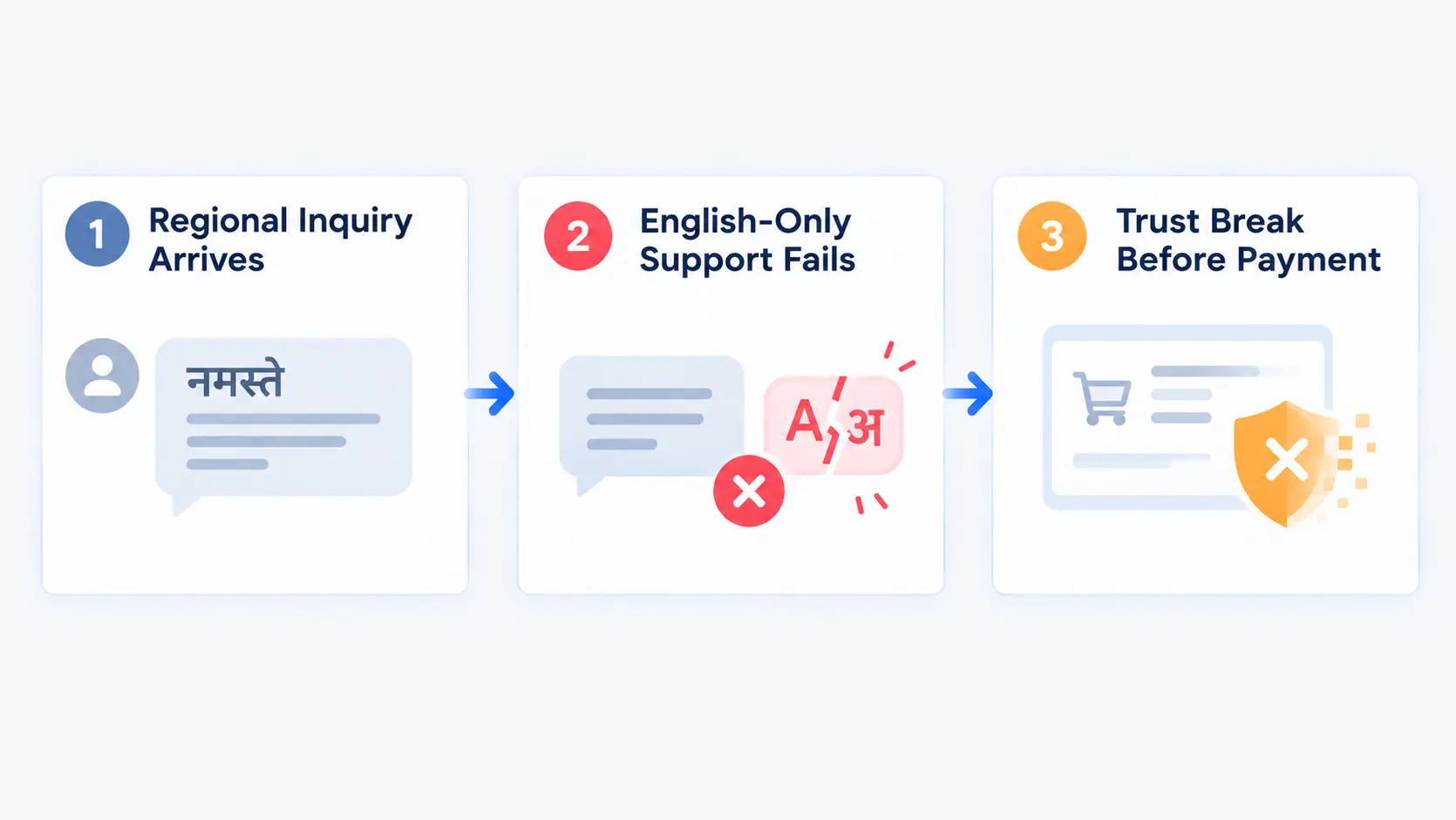
Regional Pre-Purchase Inquiries Meeting English-Only Support Teams
The breakdown looks like this: a shopper clicks your ad, opens WhatsApp or Instagram, and asks their question in Hindi, Tamil, Marathi, or a code-mixed blend. Your support team — hired for English fluency — either replies in English the shopper may not be fully comfortable with, or fumbles through a translation tool.
Neither path builds the trust that non-metro buyers need before paying. The result is a pattern merchants describe consistently: regional-language inquiries go unanswered or badly answered, and those buyers quietly stop replying.
The Trust Requirement: Why Non-Metro Buyers Chat Before They Pay
Tier-2/3 shoppers frequently make their first significant online purchases with COD or UPI — and first-time online buyers verify before they trust. They want to know the product is genuine, the return policy is real, and the seller is responsive. That verification happens in conversation, in the language they're most comfortable in.
A reply that arrives in stilted, machine-translated Hindi doesn't pass that test. A reply that never comes fails it outright. Either way, the ad click is wasted — you paid to acquire a buyer whose question your support stack couldn't answer.
Why the Three Default Approaches Fail Growing Brands
Hiring Regional Agents: The Payroll Math That Breaks Small Teams
The "obvious" fix — hire agents who speak each language — collapses under its own math. Covering Hindi, Tamil, Telugu, Marathi, Bengali, and Gujarati means five or more dedicated hires, each covering a fraction of your inquiry volume, each with payroll, training, and management overhead. For a brand scaling into non-metro markets precisely because it needs better unit economics, multiplying headcount per language is the opposite of the goal.
The Translation-Tool Workaround: Context-Blind Replies That Break Trust
Generic translation tools don't understand ecommerce context. They mistranslate product specifications, flatten return policies into nonsense, and produce replies that read like machines because they are. A shopper asking "ye original hai kya?" wants a confident, natural answer — not a garbled translation that signals the seller doesn't actually speak their language.
The deeper problem: translation tools operate message-by-message with no memory of your catalog, your policies, or the conversation's history. Every reply starts from zero.
Ignoring Regional Inquiries: The Silent ROAS Leak on Non-Metro Campaigns
The third approach is the one most brands default to without admitting it: deprioritize regional-language messages, focus support capacity on English inquiries, and accept the loss. The damage is invisible in daily operations because no report shows "revenue lost to unanswered Tamil inquiries." But it shows in non-metro ROAS — campaigns that produce clicks but underperform on revenue, with the gap silently attributed to "audience quality" when the actual failure was conversational.
The Multilingual AI Support Framework (4 Steps)
The fix is AI support that speaks your shoppers' languages natively — grounded in your catalog, deployed on the channels they already use.
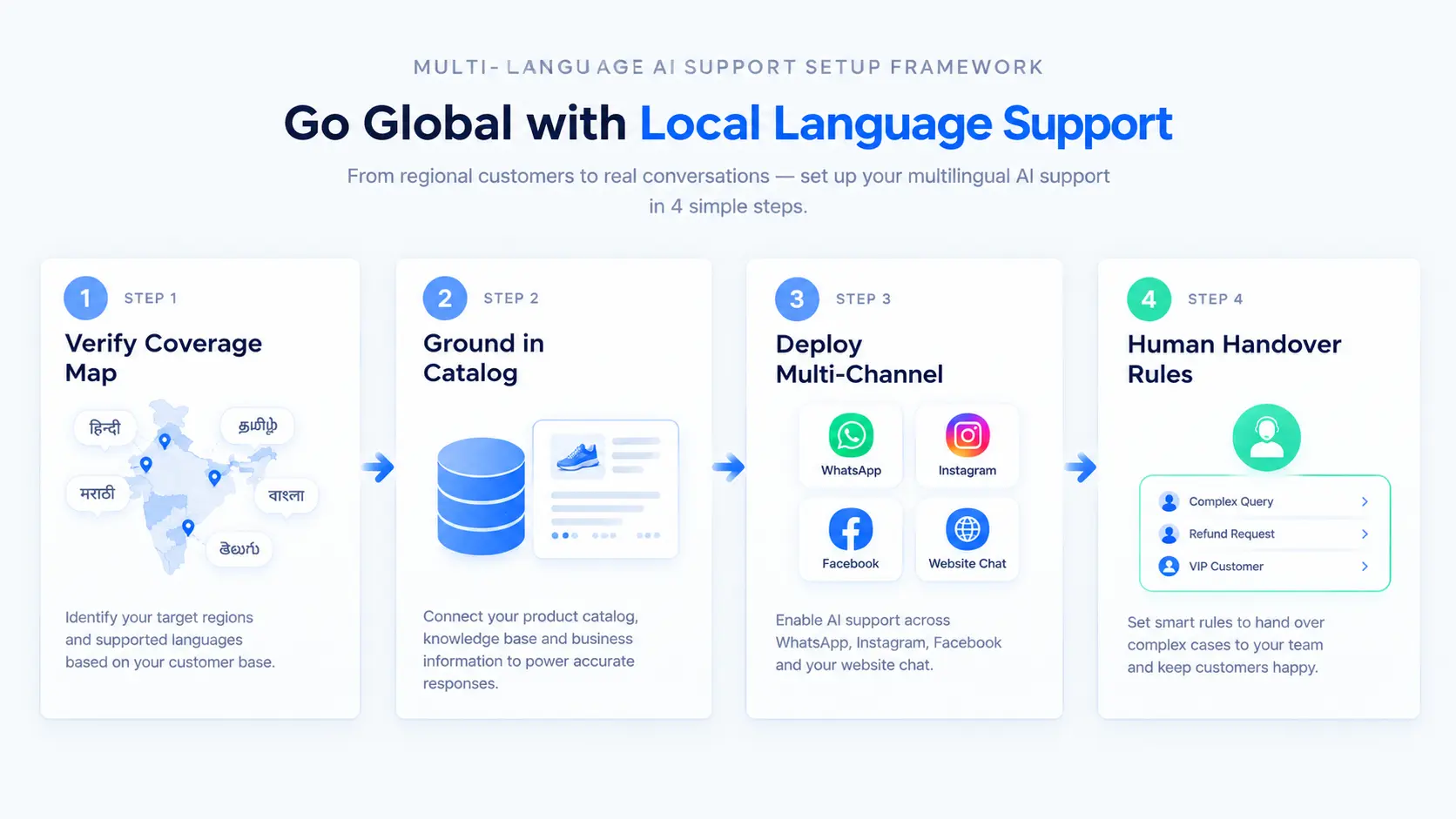
Step 1: Verify your language coverage map — which languages your shoppers actually use
Step 2: Ground AI answers in your product catalog, policies, and business knowledge
Step 3: Deploy across every channel — WhatsApp, Instagram, Facebook, website chat
Step 4: Set clear human handover rules for complex regional conversations
Step 1: Verify Your Coverage Map — Which Indian Languages Your Shoppers Actually Use
Start with data, not assumptions. Review your non-metro campaign geographies and the actual languages spoken there — and audit the languages already appearing in your inbound messages. If your ads target Tamil Nadu, you need Tamil coverage, not just Hindi. Coverage decisions should follow your ad spend map.
Step 2: Ground AI Answers in Your Product Catalog, Policies, and Business Knowledge
Language coverage without product context just produces fluent wrong answers. The AI must be trained on your actual catalog — product details, variants, pricing, delivery terms, return policies — so its regional-language replies are as accurate as your best English agent's. A shopper asking in Marathi whether the blue kurta is in stock should get the same correct answer as an English speaker.
Step 3: Deploy Across Every Channel Shoppers Use (WhatsApp, Instagram, Facebook, Website Chat)
Regional-language buyers don't pick one channel. The same Indore shopper might ask on Instagram today and WhatsApp tomorrow. Multilingual AI has to cover all of them — website chat, WhatsApp Business, Instagram DMs, and Facebook Messenger — with a unified inbox so your team sees the full conversation history regardless of where it happens.
Step 4: Set Clear Human Handover Rules for Complex or High-Value Regional Conversations
Automation handles the repetitive majority — product questions, availability, delivery timelines, policy clarifications. But complex disputes, bulk or B2B inquiries, and high-value negotiation still deserve a human. The system should hand those conversations to your team mid-thread, with full context preserved, so the shopper never has to repeat themselves — in any language.
Define the trigger conditions explicitly: conversation sentiment turning negative, order-value thresholds, requests for custom terms, or any mention of disputes and refunds. Regional-language conversations carry the same escalation rules as English ones — the only difference is the language the handover happens in.
Making Regional Conversations Feel Native (Not Machine-Translated)
Handling Code-Mixed Vernacular (Hinglish, Tanglish, and Mixed Scripts)
Real Indian shoppers rarely write in one pure language. They blend — "price kya hai bhai, COD available hai?" mixes Hindi structure with English product terms. Language-native AI handles these blends the way a fluent speaker does: understanding the intent across both languages and replying in the style the shopper used. Machine translation stumbles exactly here, because code-mixing isn't translation — it's how people actually talk.
Keeping Product Specs, Pricing, and Return Policies Accurate in Every Language
The hardest part of multilingual support isn't small talk — it's precision. Prices, sizes, delivery timelines, and return conditions must survive translation without distortion, because a wrong number in any language is a wrong promise. Catalog-grounded AI pulls facts from your product data rather than generating them, keeping every language version consistent with your actual terms.
Preserving Brand Tone Across 22 Indian Languages
Your brand voice — warm, direct, confident — shouldn't evaporate the moment a conversation switches to Tamil. Natively multilingual AI maintains tone across languages because it converses in each language directly, rather than translating an English response. To the shopper, it reads like a brand that has always spoken their language.
What to Look for in a Multilingual Ecommerce Support Platform
| Capability | Why It Matters | Brand Impact | |---|---|---| | Verified Indian Language Coverage | Native support for 22 Indian languages with English — not marketing claims | Every major regional market served without per-language hiring | | Catalog-Aware Answers | AI grounded in your products, prices, variants, and policies | Accurate answers in every language, not fluent guesses | | Multi-Channel + Unified Inbox | WhatsApp, Instagram, Facebook, and website chat in one dashboard | Regional conversations never lost between apps | | Built for Indian Ecommerce | Handles code-mixed vernacular and Indian buyer trust patterns | Conversations feel native, not machine-translated |
Conclusion: Scaling Non-Metro Growth Without Scaling Regional Headcount
The Tier-2/3 opportunity is real — cheaper acquisition, growing buyer bases, and competitive whitespace. But it's only capturable by brands whose conversations work in every language their ads reach.
Multilingual AI support closes the gap: every regional-language inquiry gets an instant, accurate, natural answer grounded in your catalog, across every channel your buyers use, with humans stepping in exactly where judgment matters. You scale the geography without scaling the headcount.
Convert Every Regional-Language Inquiry
Discover UpsellDesk — catalog-aware AI support that answers shoppers in 22 Indian languages alongside English, across WhatsApp, Instagram, Facebook, and website chat, with a unified inbox and seamless human handover for your team.
Ready to get started?
Start using UpsellDesk today and transform your customer conversations.
Written by
UpsellDesk Team · Content Strategist at UpsellDesk
Related Articles
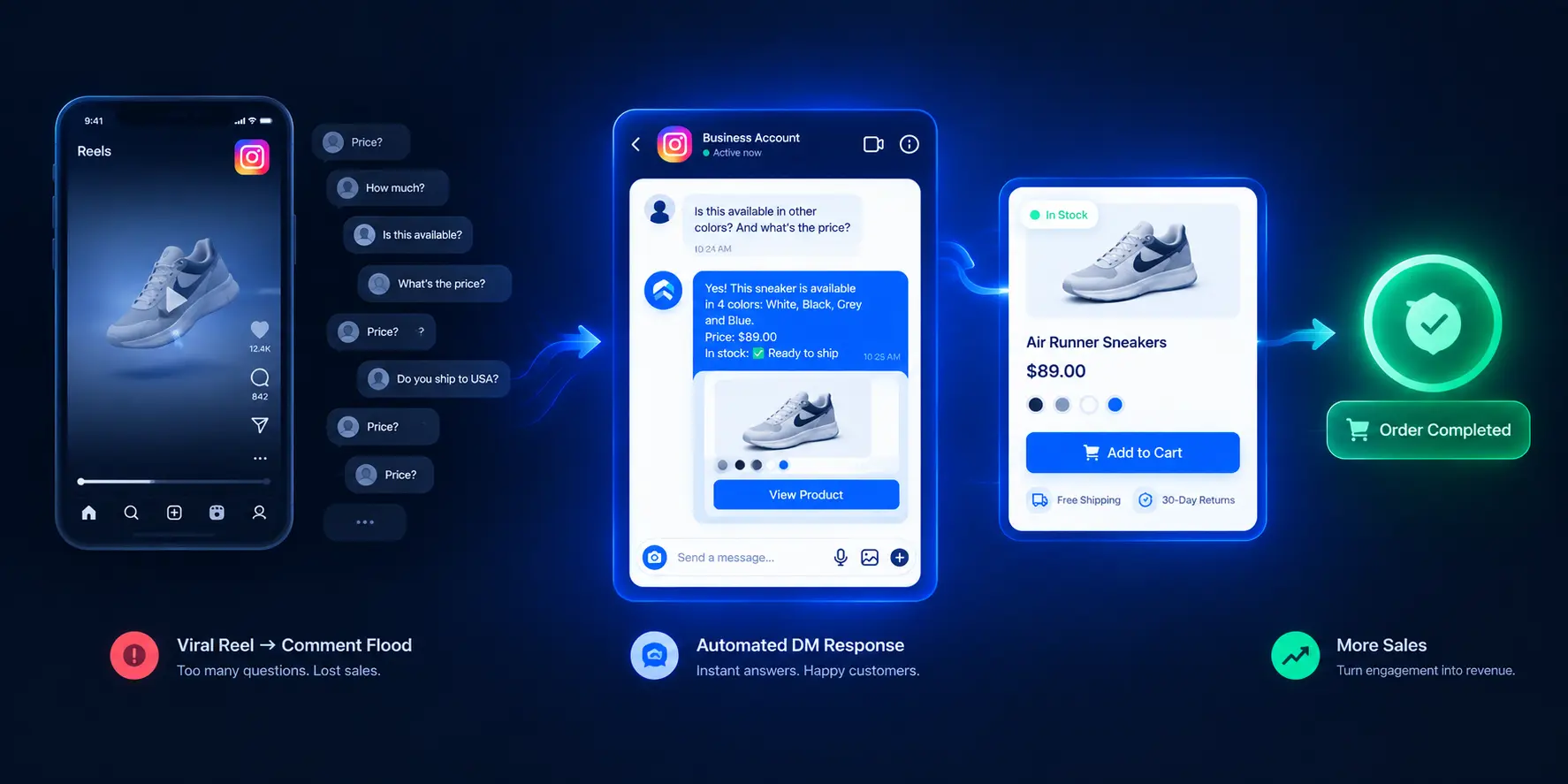
Ending "Price Kya Hai?" Chaos: Instagram Sellers Automate DM Sales
Learn how Indian Instagram sellers automate "Price?" comments into instant DM conversations with catalog details, turning social engagement into sales.
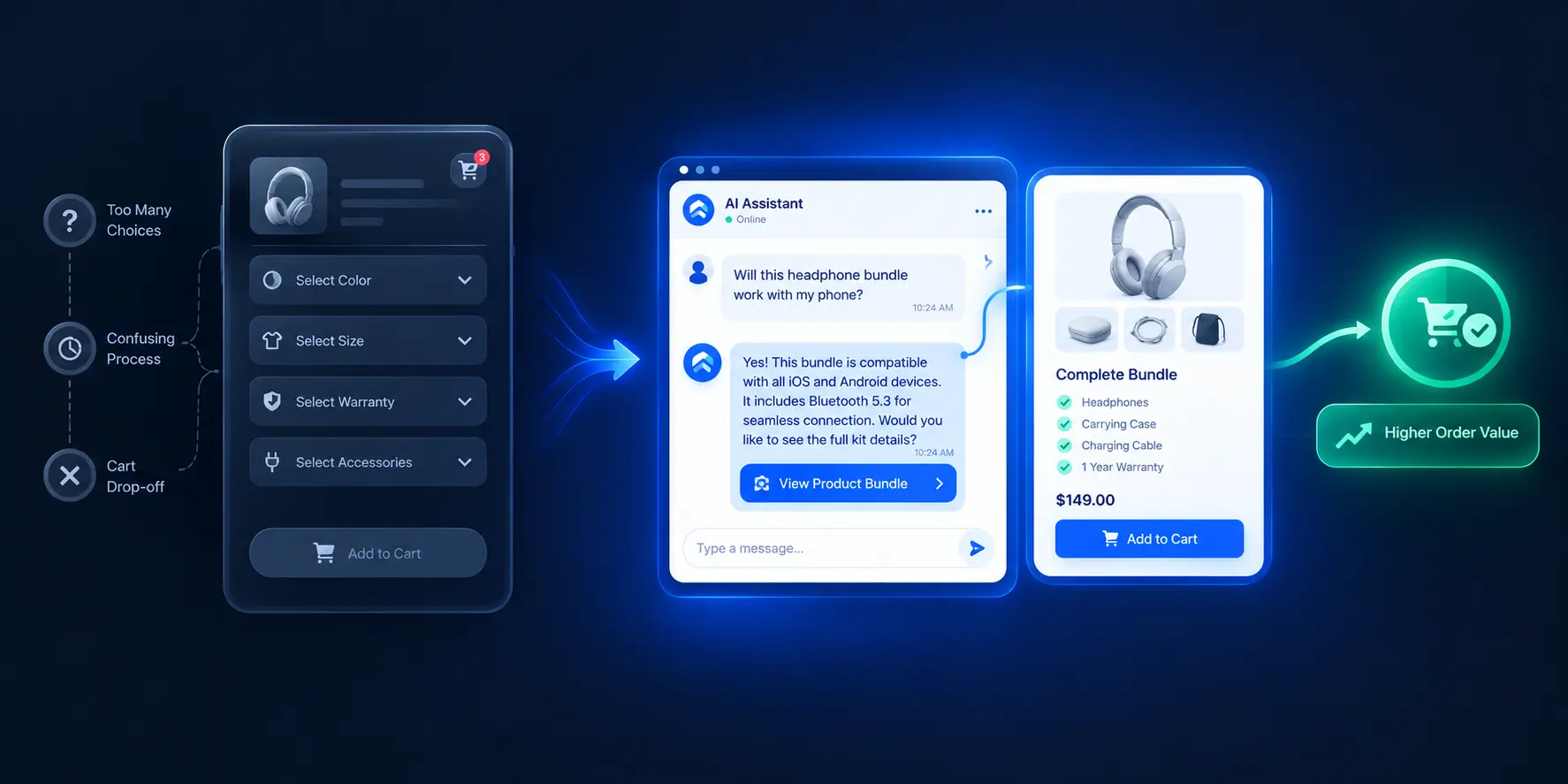
Beyond Dropdown Widgets: How D2C Brands Sell Complex Bundles in Chat
How D2C ecommerce brands use catalog-aware chat to guide shoppers through custom bundle and kit selection, eliminating choice paralysis and cart drop-off.
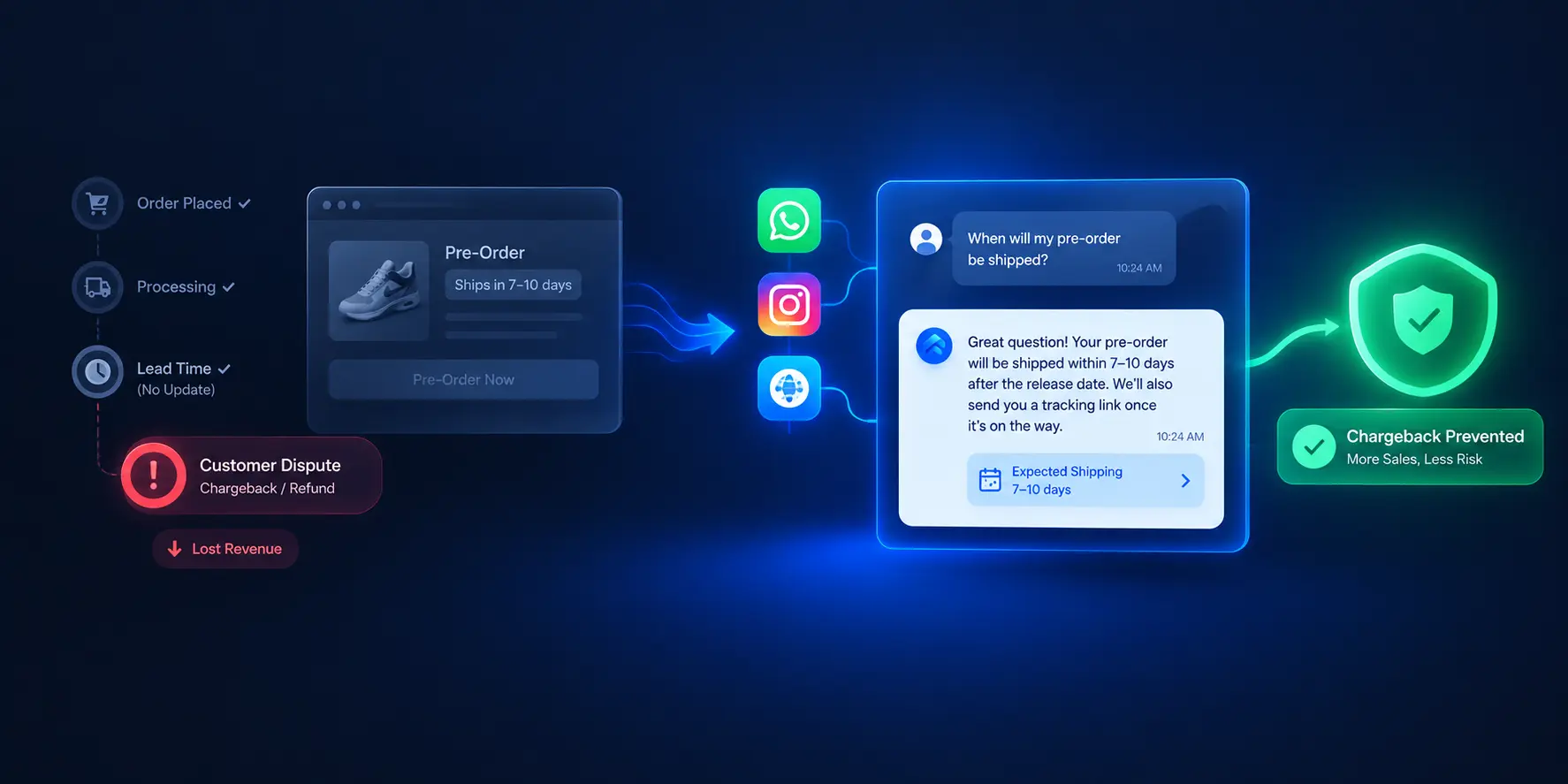
Stop Pre-Order Chargebacks: Automate Backorder Support
How D2C brands automate pre-order and backorder inquiries across WhatsApp, Instagram, and web chat to prevent chargebacks and cancellations.