Beyond Ticket Deflection: How D2C Brands Turn Repetitive Support Chats into Upsell Opportunities
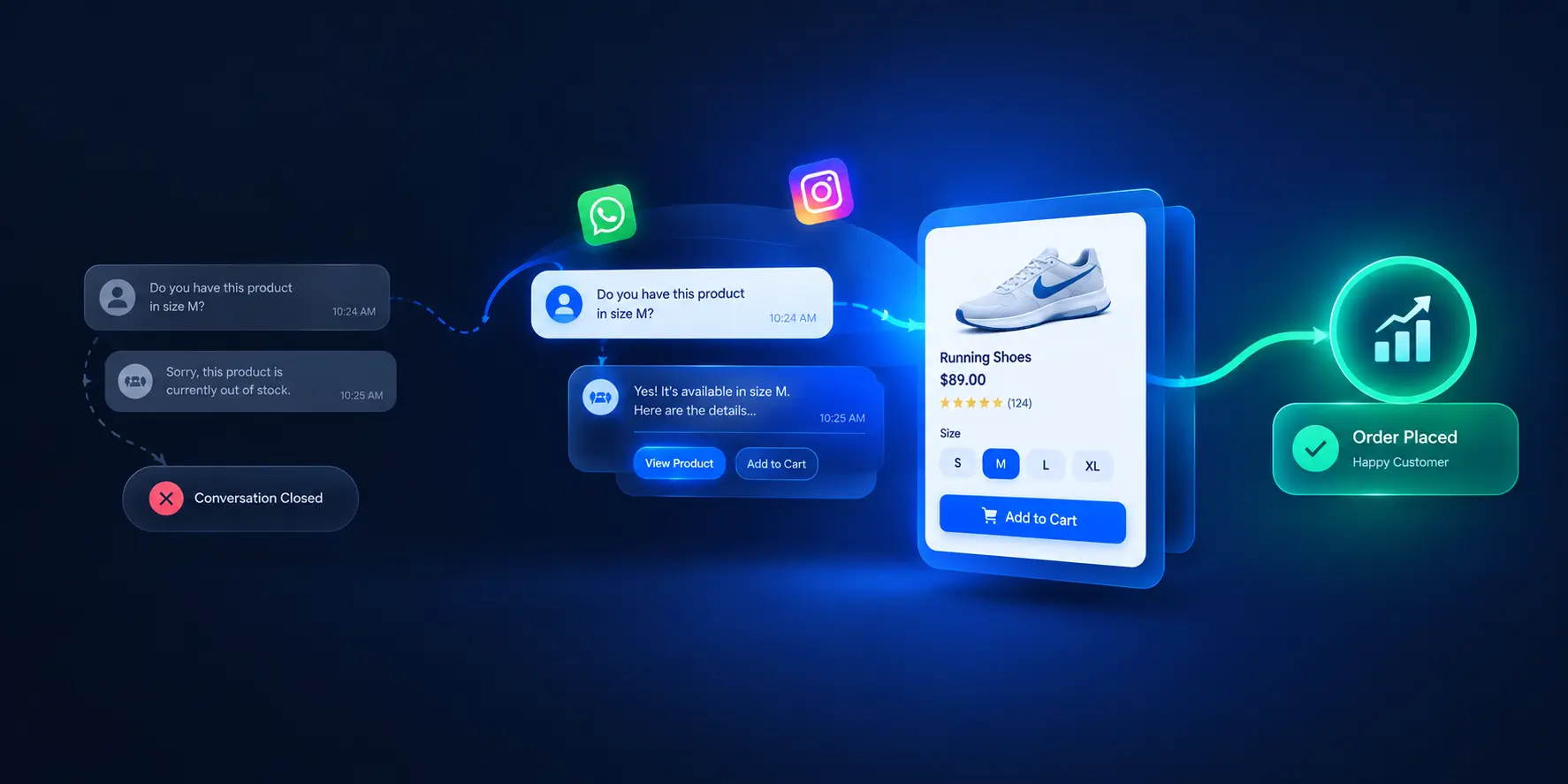
Learn how D2C brands turn routine pre-purchase support chats into catalog-aware upsell opportunities — without pushy tactics or slower response times.
Beyond Ticket Deflection: How D2C Brands Turn Repetitive Support Chats into Upsell Opportunities
If you run a D2C brand, your support team answers the same questions every day. Is this cleanser good for dry skin? What size should I get if I'm 5'10"? Does this accessory fit my phone model?
Each of those questions comes from a shopper standing at the peak of buying intent. They have found your product, they are imagining owning it, and a single uncertainty stands between them and checkout.
The standard helpdesk playbook says: answer the question, close the ticket, move on. Speed of resolution is the metric, and every minute saved is a win.
But there is a quiet cost to treating every conversation as a ticket to close. When a shopper asks about a cleanser and your team answers — accurately, politely, quickly — and then ends the conversation, no one ever mentions the moisturizer that pairs with it. No one asks if they have tried the brand's most-recommended follow-up product. The order that could have been two items stays one item, or becomes no items at all.
This is the gap between ticket deflection and conversational commerce. Closing this gap does not require more ads, more agents, or aggressive selling. It requires treating your support inbox as what it actually is: a daily stream of high-intent sales conversations.
Here is how growing D2C brands are making that shift — the operational causes of the gap, the mechanics of recommendations that feel helpful rather than pushy, and a practical framework for turning repetitive support chats into a recommendation surface.
The Legacy Helpdesk Trap: Why Closing Tickets Fast Kills Sales
The Cost-Center Mindset: How Speed Metrics Discourage Recommendations
Traditional helpdesk platforms were designed for a support model in which the agent's job is to end conversations as quickly as possible. First Response Time and Average Resolution Time are the headline metrics, and teams are staffed and reviewed against them.
Under that incentive structure, a recommendation is a liability. Suggesting a complementary product adds a message or two to the conversation. It invites follow-up questions. It slows down the very metric the team is measured on — even when it would delight the customer and grow the order.
Operators in merchant communities describe this tension directly. In Shopify and ecommerce forums, store owners regularly discuss the time burden of answering the same repetitive questions daily, and the difficulty of getting support work to contribute anything beyond cost reduction.
The result is a structural misalignment: the moment a shopper is most open to guidance is the exact moment the support workflow is engineered to end the interaction.
The Disconnected Catalog: Why Agents Struggle to Suggest SKUs Manually
Even when an agent wants to recommend a complementary product, the tooling fights them.
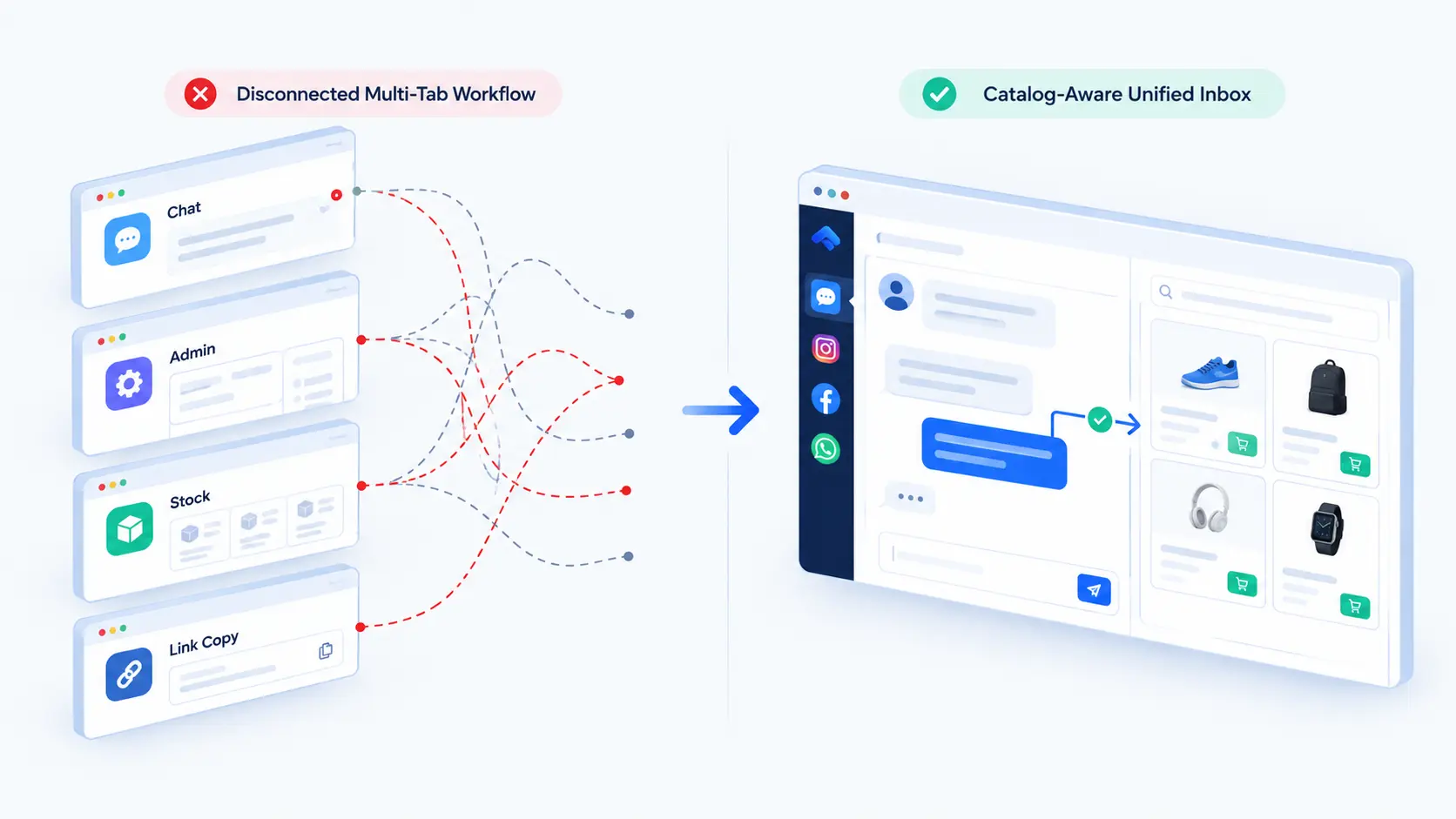
Standard live chat tools do not ingest live product catalog data. To recommend a matching item, an agent must open the store admin in another tab, search the catalog, check the variant and stock status, copy a product URL, and paste it back into the chat. By the time the link arrives, the shopper may have already moved on.
This is not a people problem. It is a context problem. When the catalog lives outside the conversation, recommendations are operationally expensive — so they mostly do not happen.
The Pre-Purchase Paradox: Missing Customers at Peak Buying Intent
Consider the shape of a typical pre-purchase question:
- "Is this cleanser good for dry skin?" — the shopper has selected a product and is validating fit.
- "What size should I get if I'm 5'10"?" — the shopper is one answer away from adding to cart.
- "Does this keyboard case fit the 11-inch model?" — the shopper is checking compatibility before committing.
These are not interruptions to the sales process. They are the sales process. A shopper who asks a sizing question and receives a confident answer is primed for a natural next step: the matching accessory, the complementary product, or the better-suited alternative.
When the conversation ends at the bare answer, the store has paid full acquisition cost to earn that conversation — and then declined the easiest sale within it.
The Mechanics of Conversational Upselling: Helpful vs. Pushy
The fear that holds many brands back is understandable: nobody wants their support channel to feel like a call center reading a script. The difference between a recommendation that converts and one that repels comes down to sequence and relevance.
Answering the Core Question First (The Foundation of Trust)
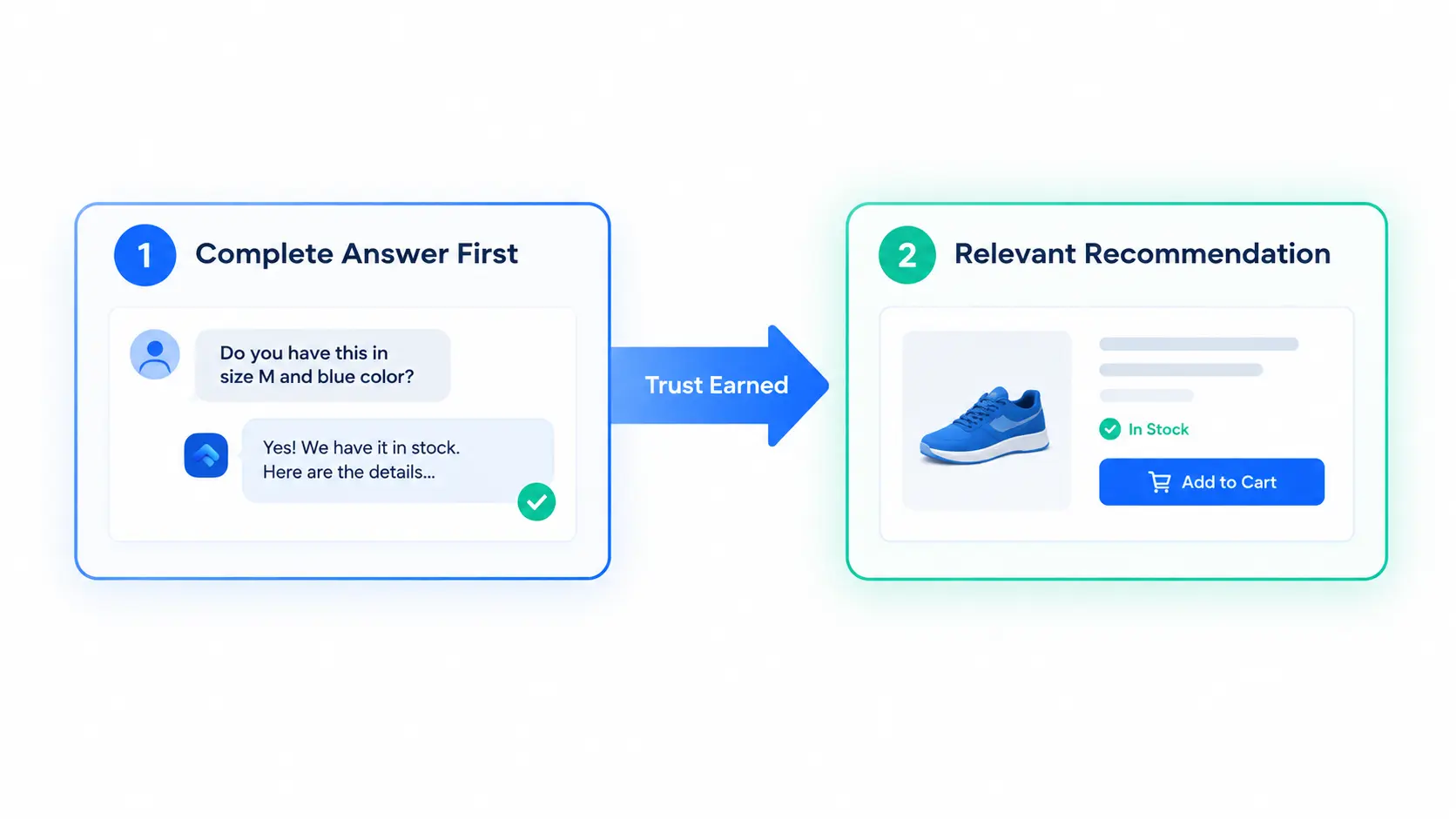
The rule that separates helpful recommendations from pushy ones is simple: the customer's question gets answered completely first.
A recommendation introduced before the primary question is resolved reads as a sales pitch. A recommendation introduced after a genuinely useful answer reads as expert guidance — the same experience as a good in-store assistant who answers your question and then says, "most people pair this with X."
For example, when a shopper asks whether a cleanser suits dry skin, the helpful sequence is:
- Answer the question directly and accurately.
- Then — and only then — mention the complementary product that enhances the item being discussed.
The answer earns the trust that makes the recommendation land.
Contextual Recommendations vs. Aggressive Cross-Selling
Two failure modes make recommendations feel pushy:
- Irrelevance: pitching a high-margin item that has nothing to do with the shopper's actual question.
- Bad timing: interrupting a complaint or post-purchase issue with a promotional suggestion.
Both are avoided by one discipline: recommend only what directly enhances the item or problem the customer raised. The shopper who asks about a cleanser for dry skin should hear about the moisturizer that completes that routine — not about a unrelated product from an entirely different line.
Identifying High-Intent Conversations
Not every conversation is a recommendation moment. The strongest signals include:
- Sizing and fit questions — the shopper is validating a specific purchase.
- Compatibility questions — the shopper is checking whether an item works with something they own.
- Usage and routine questions — the shopper is planning how the product fits their life.
- Comparison questions — the shopper is deciding between two options and open to guidance.
Conversely, a delayed-package complaint or a refund request is a service moment, not a selling moment. Brands that respect that boundary keep customer trust — and keep the recommendation channel credible for the moments that count.
A 4-Step Framework to Turn FAQ Support into a Recommendation Surface
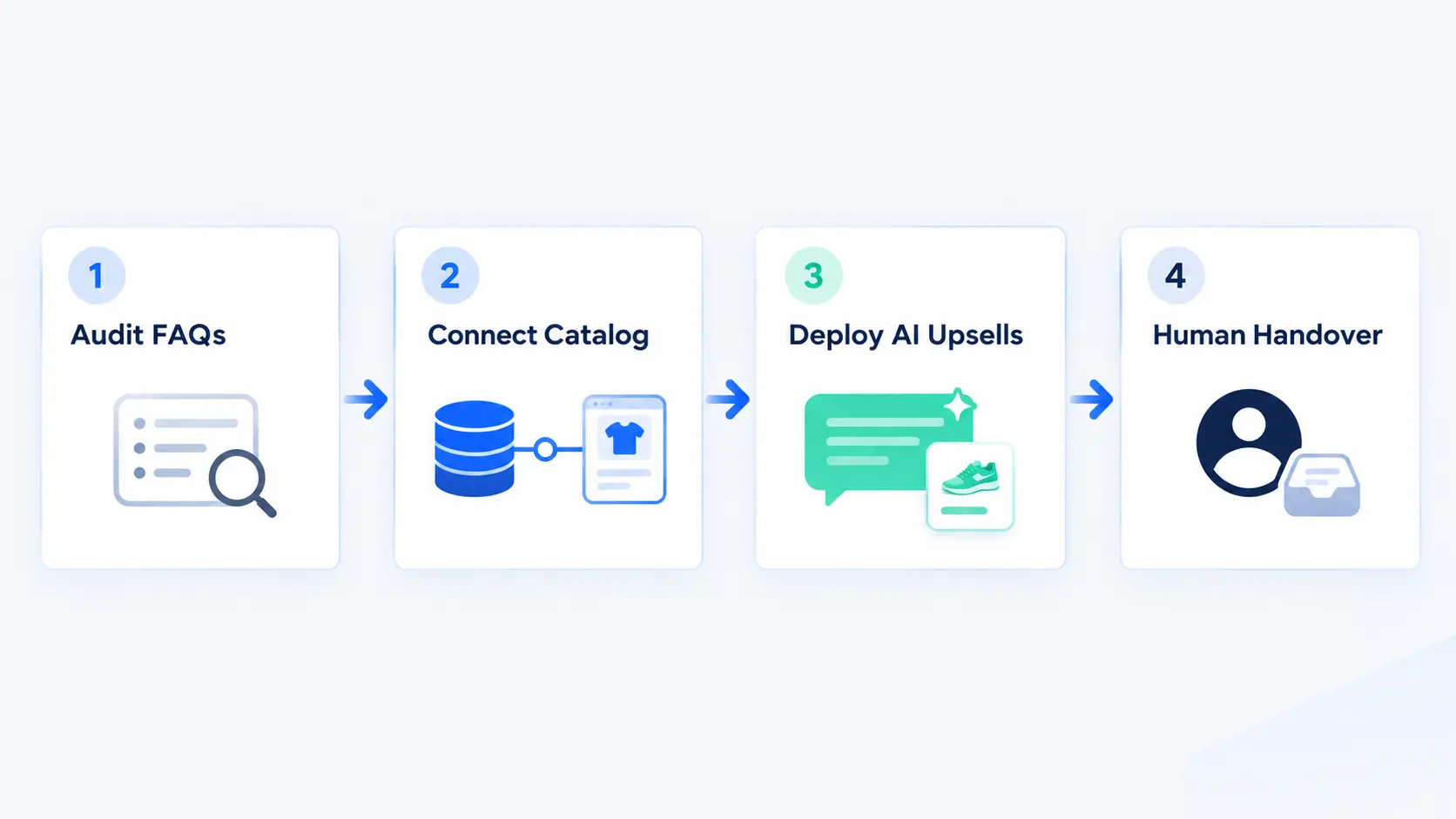
Step 1: Audit Your Most Frequent Pre-Purchase Customer Questions
Pull the last 30 days of chat, WhatsApp, and Instagram DM history. Group the messages into categories. Most stores find that a handful of question types — sizing, stock availability, shipping timelines, compatibility, ingredient or material questions — account for the majority of pre-purchase volume.
For each high-frequency category, ask: what would a knowledgeable in-store associate say after answering this question? That answer is the seed of your recommendation logic.
Step 2: Connect Live Store Catalogs and Variant Rules to Your Inbox
Recommendations are only trustworthy when they reference real, current products. Connect your conversation channels to your store's catalog data — titles, prices, variants, attributes such as size and color, and stock status where your product data supports it.
This single integration removes the tab-switching tax that suppresses recommendations in the first place. When agents (and automated assistants) can see the catalog beside the conversation, suggesting the matching item becomes a one-step action instead of a multi-tab research project.
Step 3: Implement Contextual AI Recommendations for Routine Queries
Once the high-frequency question categories are mapped and the catalog is connected, routine queries can be answered instantly — with the recommendation woven in after the answer. A catalog-aware assistant trained on your business knowledge and product catalog can answer the dry-skin question accurately and naturally mention the complementary product.
The key requirements for doing this without degrading experience:
- The answer must be accurate and grounded in your actual catalog and policies.
- The recommendation must be contextually related to the question asked.
- Complex, emotional, or high-value conversations must route instantly to a human.
Step 4: Establish Seamless Human Handover for High-Value Sales Advice
Automation handles the routine layer; humans close the conversations that matter most. When a shopper has custom requirements, a nuanced complaint, or a high-value consideration, the conversation should transition to a human agent with full history preserved — no repeated questions, no lost context.
This division of labor is what makes the model sustainable: instant answers and consistent recommendations 24/7 for routine questions, and human expertise exactly where it changes outcomes.
Evaluating Catalog-Aware Tooling for Social and Web Commerce
If you are evaluating platforms to support this model, the capabilities that matter are:
- Real-time catalog integration across channels. The tool should pull live product data — not static links — so stock, variants, and prices are always accurate in the conversation, whether it started on your website, WhatsApp, Instagram, or Facebook.
- Multi-channel continuity. A shopper who asks on Instagram and follows up on WhatsApp should be treated as one conversation with one history.
- Business-knowledge grounding. The assistant should be trained on your FAQs, policies, and product information, so answers reflect your store — not generic guesses.
- Agent empowerment. Human reps should be able to send accurate product cards instantly from within the shared inbox, with conversation assignment and internal notes for team coordination.
- Human takeover without context loss. When a conversation needs a person, the handover should be immediate and invisible to the customer.
Platforms like UpsellDesk are built around exactly this architecture: AI assistants trained on your business knowledge and product catalog, answering customer questions and recommending relevant products across website chat, WhatsApp, Instagram, and Facebook — with every conversation managed in a unified inbox and human takeover available whenever a conversation needs a person.
Conclusion & Operational Takeaway
Support is not just a cost center that answers questions — it is your highest-intent sales channel, staffed daily by shoppers who are actively trying to buy from you.
The shift from ticket deflection to conversational commerce does not require a bigger team or a pushier script. It requires:
- Audit your most frequent pre-purchase questions and the natural recommendations that follow them.
- Connect your live catalog to your conversations so recommendations are one step, not five tabs.
- Recommend contextually, after the answer, only where it genuinely helps.
- Hand over to humans for the conversations that deserve them.
Brands that make this shift stop paying acquisition costs for conversations they decline to sell in — and start letting their existing support workload do compounding work for average order value.
Frequently Asked Questions
How can support agents recommend products without feeling pushy or salesy?
Answer the customer's primary question completely first, then introduce a complementary product that directly enhances the item being discussed. Recommendations introduced after a genuinely useful answer read as expert guidance rather than a pitch. Never interrupt a complaint or post-purchase issue with promotional suggestions, and only recommend products relevant to the question the customer actually asked.
What is the difference between rule-based chatbot deflection and catalog-aware AI?
Rule-based chatbots serve static, pre-written answers to a fixed list of questions — useful for deflection, but blind to nuance. Catalog-aware AI ingests your live product catalog, variant relationships, and business knowledge, so it can answer nuanced questions accurately and dynamically surface complementary products that match the shopper's actual context.
Does automated product upselling in live chat slow down response times?
No — done correctly, it removes the slowest part of manual recommendations. Because the catalog lives inside the conversation tool, recommendations generate alongside the answer itself. There is no separate admin search, no tab switching, and no link pasting, so responses stay fast while carrying more commercial value.
When should an automated upsell conversation be handed over to a human team member?
Routine pre-purchase questions — sizing, shade matching, compatibility, availability — suit automated handling with contextual recommendations. The moment a conversation involves custom requirements, a complaint, an emotional tone, or a high-value consideration, it should transition instantly to a human agent with the full conversation history preserved.
Ready to get started?
Start using UpsellDesk today and transform your customer conversations.
Written by
UpsellDesk Team · Content Strategist at UpsellDesk
Related Articles
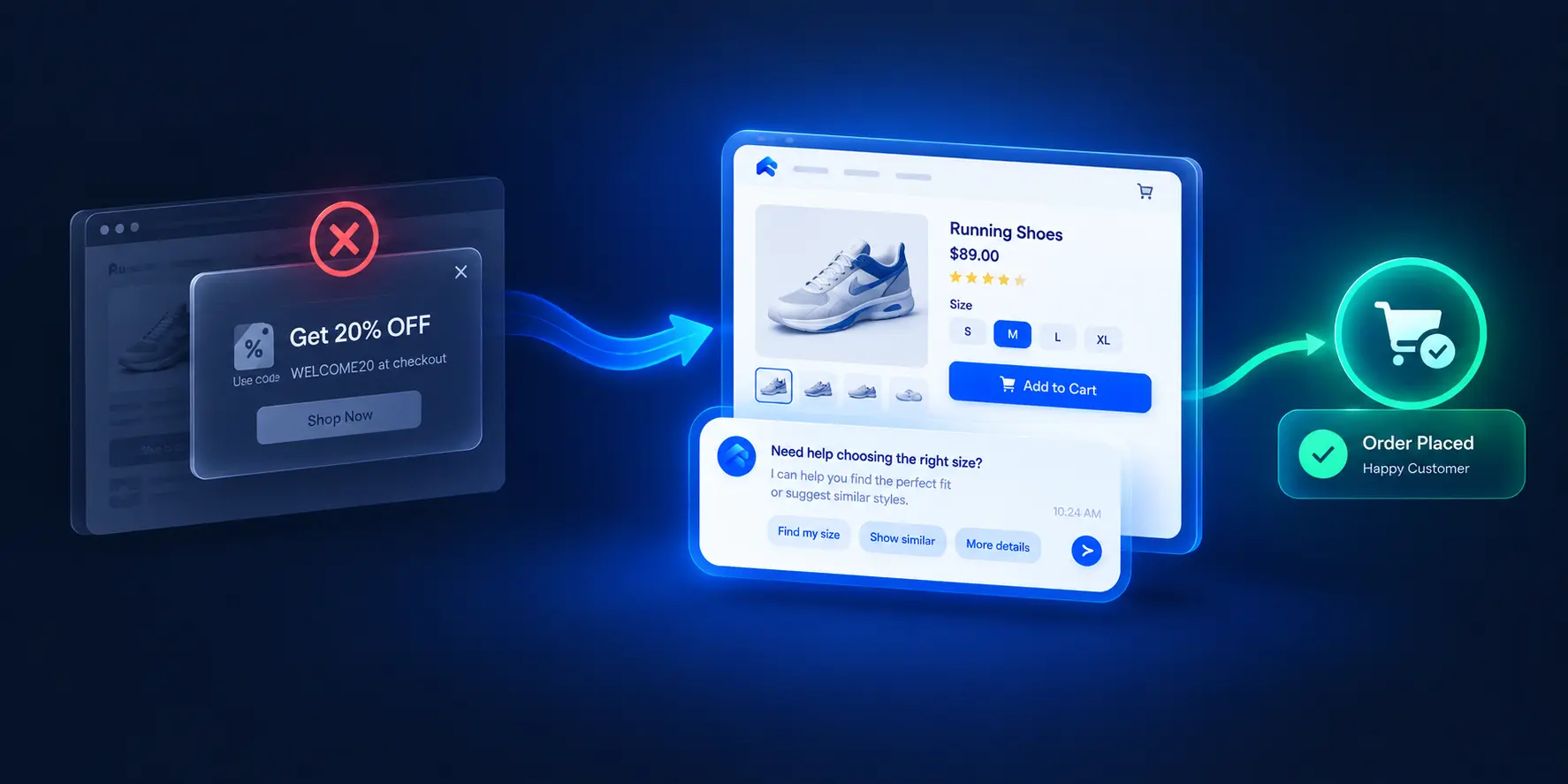
Beyond Discount Popups: Capture Anonymous PDP Shoppers with Proactive Chat
How D2C brands convert high-intent anonymous store visitors with behavior-triggered, catalog-aware chat — help-first engagement instead of margin-eroding popups.
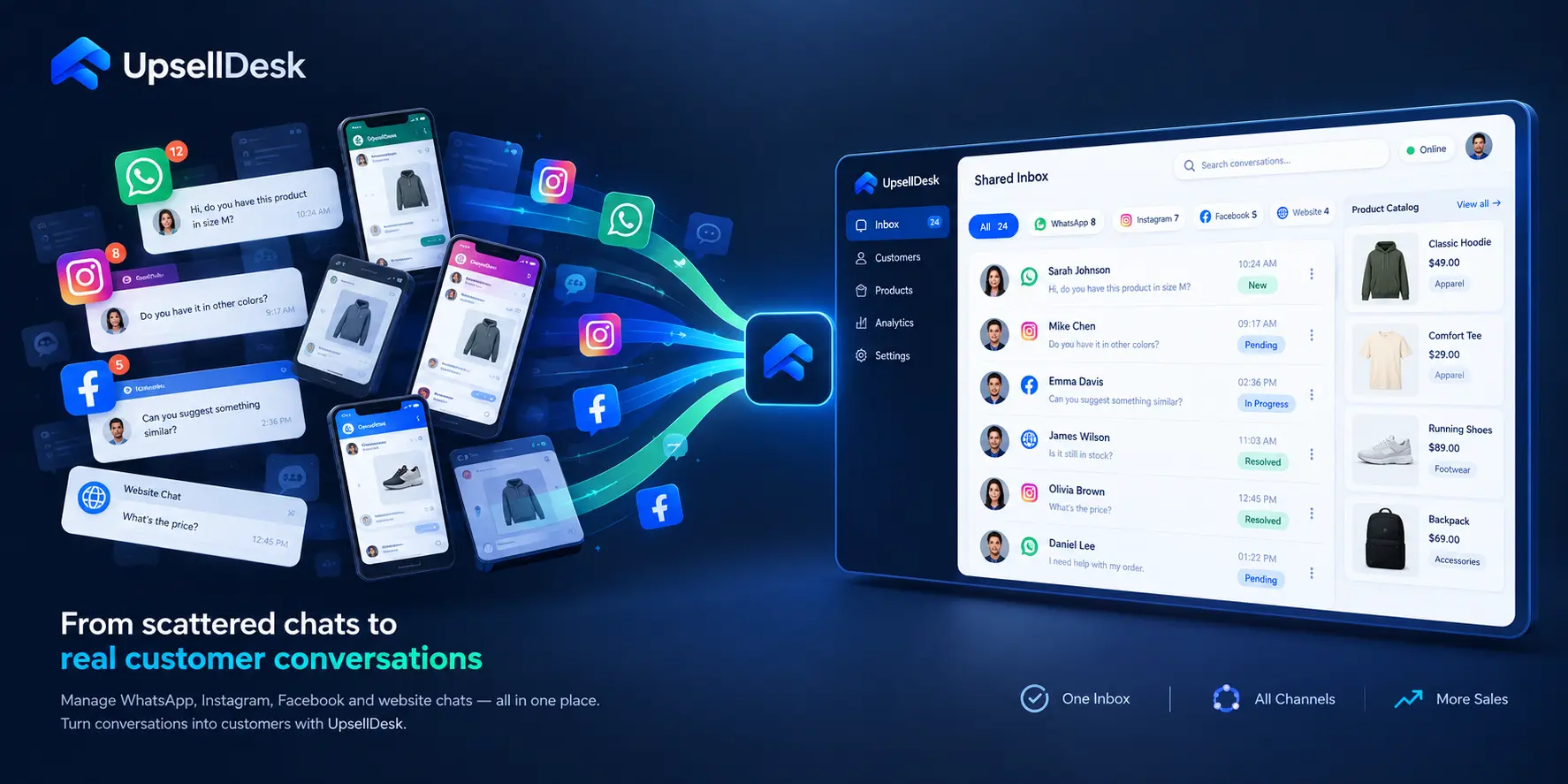
The Multi-Channel Support Trap: Why Tool Switching Is Costing Your Ecommerce Store Time and Sales
Learn how fragmented WhatsApp, Instagram, and web chat inboxes slow down support teams, cost conversions, and how to unify social messaging in one dashboard.